


What to Consider When Buying a Chiller: Comprehensive Buyer's Guide
An investment in an industrial chiller directly dictates your facility's long-term energy costs and production efficiency. In this guide, we have compiled critical engineering criteria you must consider when selecting the optimal chiller system for your needs, including capacity calculation, compressor technology, and energy efficiency (COP).
This article was automatically translated from the Turkish original.
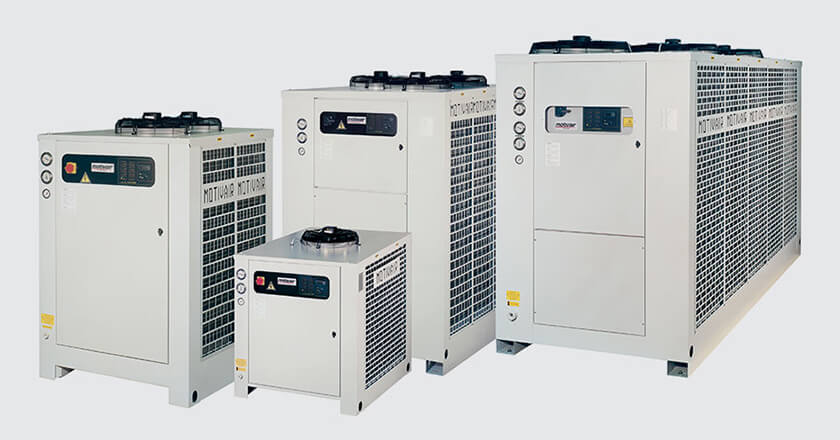
What to Consider When Buying a Chiller: Comprehensive Buyer's Guide
Purchasing a chiller (chilled water system) for industrial facilities, hospitals, hotels, or plastic injection factories is a much more complex process than buying standard commercial equipment. The chiller is the heart of your facility. An incorrectly specified system not only wastes your initial capital expenditure (CAPEX) but also leads to years of exorbitant electricity bills, frequent breakdowns, and halted production lines.
Before making this critical investment requiring a significant budget, you must look far beyond the initial price tag on the unit. Here are the key engineering criteria you must consider when selecting the right chiller for your facility:
1. Engineering-Based Capacity Calculation, Not Estimation
The biggest mistake in chiller selection is an estimation-based approach, such as "Our old unit was 50 tons, let's get the same" or "100 kW should be enough for this factory." Cooling capacity depends on dozens of variables, including the specific heat of the processed material, hourly production volume, facility insulation status, and local ambient climate conditions (outdoor air temperature).
An oversized chiller will cycle on and off repeatedly (short cycling), drastically reducing compressor lifespan. An undersized unit, on the other hand, will never reach the target temperature, running constantly at full load and overheating. Capacity must always be determined through professional thermodynamic calculations.
2. Selecting the Right Compressor Technology
The compressor is the engine of the chiller system. Selecting the right compressor technology tailored to your facility's operating regime is crucial:
Scroll Compressors: Generally ideal for lower-to-medium capacity facilities with fluctuating loads. They operate quietly.
Screw Compressors: Indispensable for high-capacity industrial facilities (plastics, metals, food) operating 24/7 under heavy-duty conditions. They are heavy-duty and long-lasting.
Inverter (Variable Frequency Drive - VFD) Technologies: Enable the compressor to adjust its speed according to the real-time cooling demand of the facility. Although the initial investment cost is slightly higher, it pays for itself in a very short time through massive electricity savings.
3. Air-Cooled vs. Water-Cooled Chillers
This decision depends heavily on the physical conditions and infrastructure of your facility.
Air-Cooled Chillers: Easy to install, typically located outdoors (roof or yard). They require no water consumption, but their efficiency may decrease slightly during hot summer periods when ambient temperatures spike.
Water-Cooled Chillers: Installed indoors in mechanical equipment rooms. They require a cooling tower for heat rejection. While the initial setup is more complex, their energy efficiency (COP) is significantly higher as they are not directly impacted by ambient air temperatures.
4. Energy Efficiency (COP) and Total Cost of Ownership (TCO)
The initial purchase price of a chiller is negligible compared to the electricity costs it will consume over its 15-year operational lifespan. A low-efficiency unit (low COP value) chosen solely for its low price tag will reclaim that cost difference through higher electricity bills in just a few months. When comparing equipment, look beyond capital cost and evaluate the cooling capacity delivered per kW of power consumed (COP values).
5. After-Sales Service and Mechanical Infrastructure
Even if you purchase the world's best chiller, you cannot achieve peak efficiency without proper piping design, correctly sized pumps, and adequate insulation. Furthermore, the system must be backed by a reliable service network capable of rapid emergency response (SLA) and immediate spare parts availability in the event of a breakdown.
Get Professional Support for the Right Investment
Investing in a chiller is not a decision to be made simply by browsing a catalog. The system must be fully integrated into your facility, with every detail—from pipe sizing to automation—thoroughly engineered.
At FSI Cooling Engineering, prior to equipment sales, we conduct a thermodynamic analysis of your facility, calculate your actual cooling load, and engineer a turnkey mechanical system tailored to your needs. We don't just sell equipment; we deliver long-term partnership and energy efficiency to your business.
Contact us before making your investment to consult with our engineering team for a free site assessment and project consultancy.
Engineering support for your system
Contact our team for chiller selection, a maintenance plan or breakdown response.