

Chiller Fault Codes and Common Issues: Diagnostic Guide
Causes of high pressure, low pressure, freeze protection, and flow switch alarms, initial field checks, and permanent solutions.
This article was automatically translated from the Turkish original.
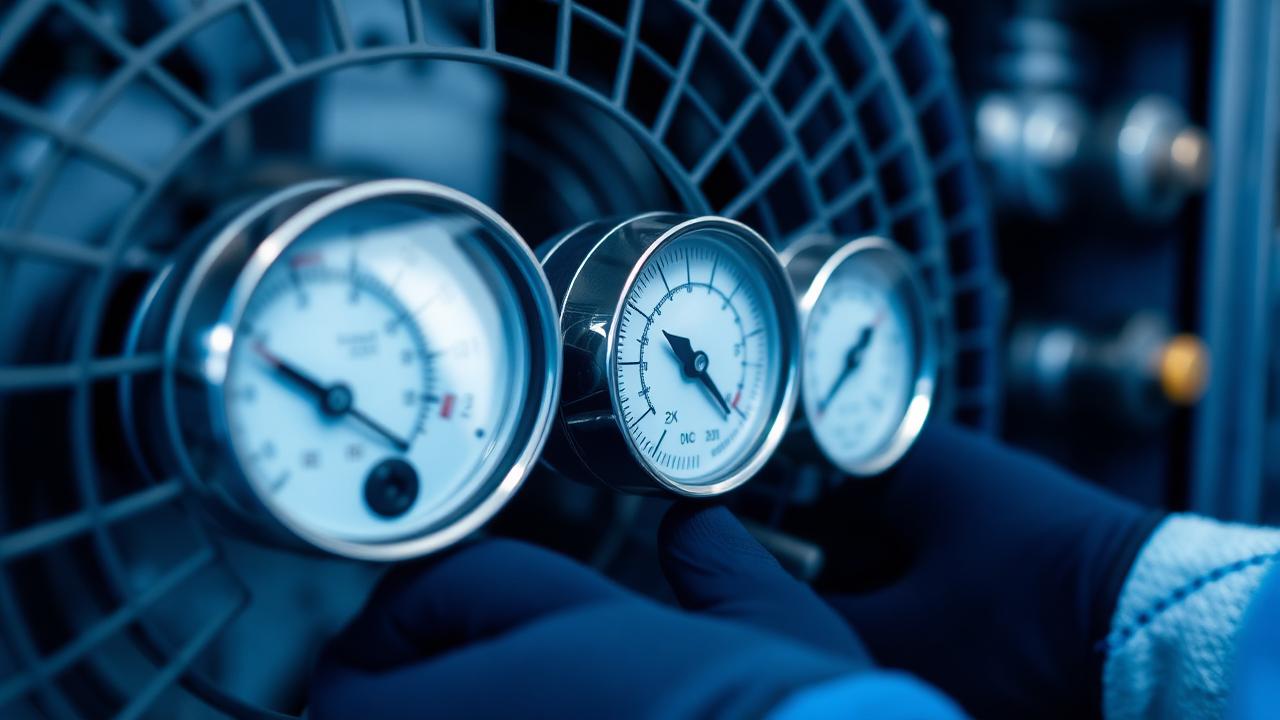
An alarm is a symptom; the cause lies within the system
The code displayed on the chiller panel indicates that the unit has entered a protective state; it does not reveal the underlying cause. The same "high pressure" alarm can result from a dirty condenser, a faulty fan, an overcharge of refrigerant, or a high ambient temperature. Therefore, rather than simply resetting the alarm and continuing, it is essential to log the pressure, temperature, and current readings at the time of the alarm to identify the root cause.
High pressure alarm (HP / High Pressure)
Occurs whenever the condenser cannot reject heat. Field inspection sequence:
- Condenser coil fouling and obstructions to airflow
- Fan motor operation, direction of rotation, and speed control
- In water-cooled systems, cooling tower water flow rate, condenser approach temperature, and internal tube scaling
- Refrigerant overcharge and the presence of non-condensable gases (air)
- Condensing pressure control settings and fan speed controller board
A condensing approach temperature exceeding the design value by 3 K is a measurable indicator that cleaning is required.
Low pressure alarm (LP / Low Pressure)
Generally related to insufficient heat transfer at the evaporator or a loss of refrigerant:
- Decreased water flow rate on the evaporator side (closed valve, clogged filter, faulty pump)
- Refrigerant leak; an increase in superheat values is the first indicator of a leak
- Clogged filter drier or stuck expansion valve
- Incorrectly configured capacity control during part-load operation
Freeze protection (Freeze / Low Water Temperature)
Triggers when the leaving water temperature drops below the setpoint. The most common causes are insufficient water flow rate, a dirty plate heat exchanger, or a faulty temperature sensor. In systems using glycol, altering the mixture ratio without measuring it can also trigger this alarm. Raising the setpoint without verifying sensor calibration masks issues that can ultimately lead to heat exchanger failure due to freezing.
Flow fault (Flow Switch / No Flow)
Indicates a loss of flow in the hydronic circuit. Even if the pump appears to be running, common causes include air locks, closed balancing valves, clogged strainers, or a faulty flow switch. Measuring the differential pressure across the circuit is faster than guessing.
Compressor overcurrent and thermal overload tripping
Phase imbalance, low voltage, oil level issues, or high condensing pressure increase compressor current draw. If the imbalance between the three phase currents exceeds 10%, the electrical system must be inspected. If the oil pressure alarm recurs, the oil return system and crankcase heater must be checked.
Three habits to prevent recurring alarms
- Measure and record: Suction/discharge pressure, superheat, subcooling, entering/leaving water temperatures, and current draws should be documented in a written report during every service visit.
- Monitor part-load operation: Facilities operate at part load most of the time; if capacity control is not properly tuned, short-cycling will occur, leading to compressor failure.
- Do not neglect the water side: A significant portion of chiller failures originates from the hydronic circuit rather than the refrigeration cycle.
When to call for service?
If the alarm recurs within 24 hours, if compressor noise changes, if the leaving water temperature cannot maintain its setpoint, or if a refrigerant loss is suspected, intervention should not be delayed. The FSI Cooling team delivers fault diagnosis along with a measurement report, outlining all planned actions in writing prior to repair.
Engineering support for your system
Contact our team for chiller selection, a maintenance plan or breakdown response.